Trader Joe's
Trader Joe's
For the Underpaid & Overeducated
Why Trader Joe’s resonates with Millennials on both price and quality, and how those insights can inform future campaigns rooted in participation, not promotion.
The Ask
A strategic brief examining the Millennial grocery shopper to uncover insights that can guide Trader Joe’s future communications and campaign strategy.

The Modern Me Decade
How History Repeats Itself.
In the 1970s, Americans were becoming more educated, globally curious and interested in food as a reflection of identity. Trader Joe’s was born out of this cultural shift.
Founder Joe Colombe saw an audience that wanted access to the world, but didn’t have the income to chase that luxury. Education was rising. Curiosity was expanding. Wages were not.
Fifty years later, that same tension has returned.

Highly Educated.
Financially Constrained.
Deeply Curious.
Millennials are one of the most educated generations in history, yet many feel financially behind where they expected to be. They value experience, culture and self-improvement, but are forced to navigate rising costs with limited flexibility.
This contradiction shapes every purchase they make, including what ends up in their grocery cart.
Affordability Is Expected.
Quality is Required.
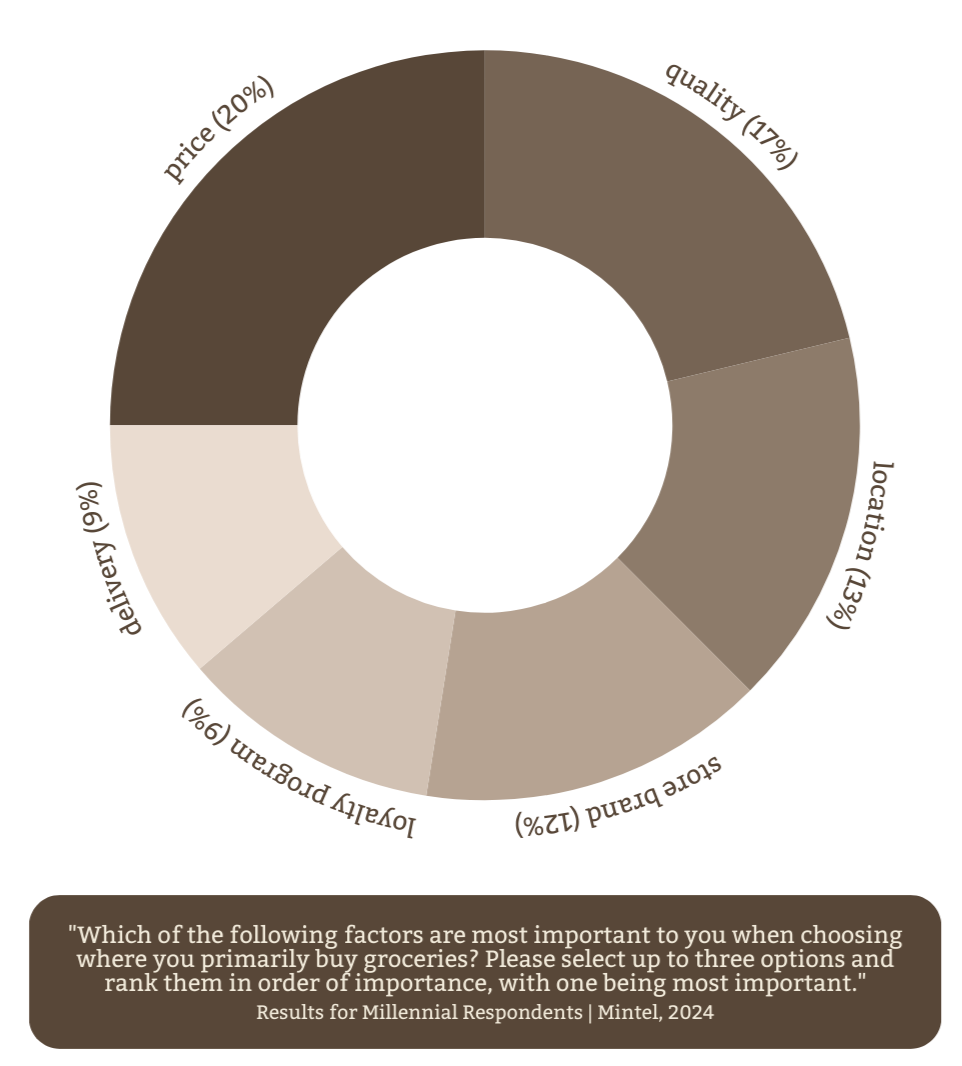
For Millennials, grocery shopping is no longer about brand loyalty, it’s about personal standards.
They are willing to trade brand names for better value, but not at the expense of ingredients, ethics, or experience.
The real challenge isn’t choosing between price and quality. It’s finding a brand that respects both.
The Trader Joe’s Advantage

Designed to Deliver Both.
Trader Joe’s prices are roughly 20% lower than the national average, powered by a private-label-first model that eliminates unnecessary brand markups and advertising costs.
This isn’t about being cheap, it’s about being intentional. By controlling its products end to end, Trader Joe’s invests where it counts: quality, consistency, and trust.

A Variety of Foods, Not Brands.
While traditional grocers overwhelm shoppers with tens of thousands of SKUs, Trader Joe’s curates roughly 4,000 products, most under its own label.
The result is a shopping experience built around discovery, not decision fatigue. Global flavors replace familiar logos. Exploration replaces excess.
It’s abundance, redefined.
The Strategic Insight
Trader Joe’s is a brand for the…
Underpaid
Price is the most important purchase factor
&
Overeducated
Quality is the most important purchase factor
Community is the Brand.
Trader Joe’s doesn’t rely on traditional advertising to build loyalty. Its customers do it for them.
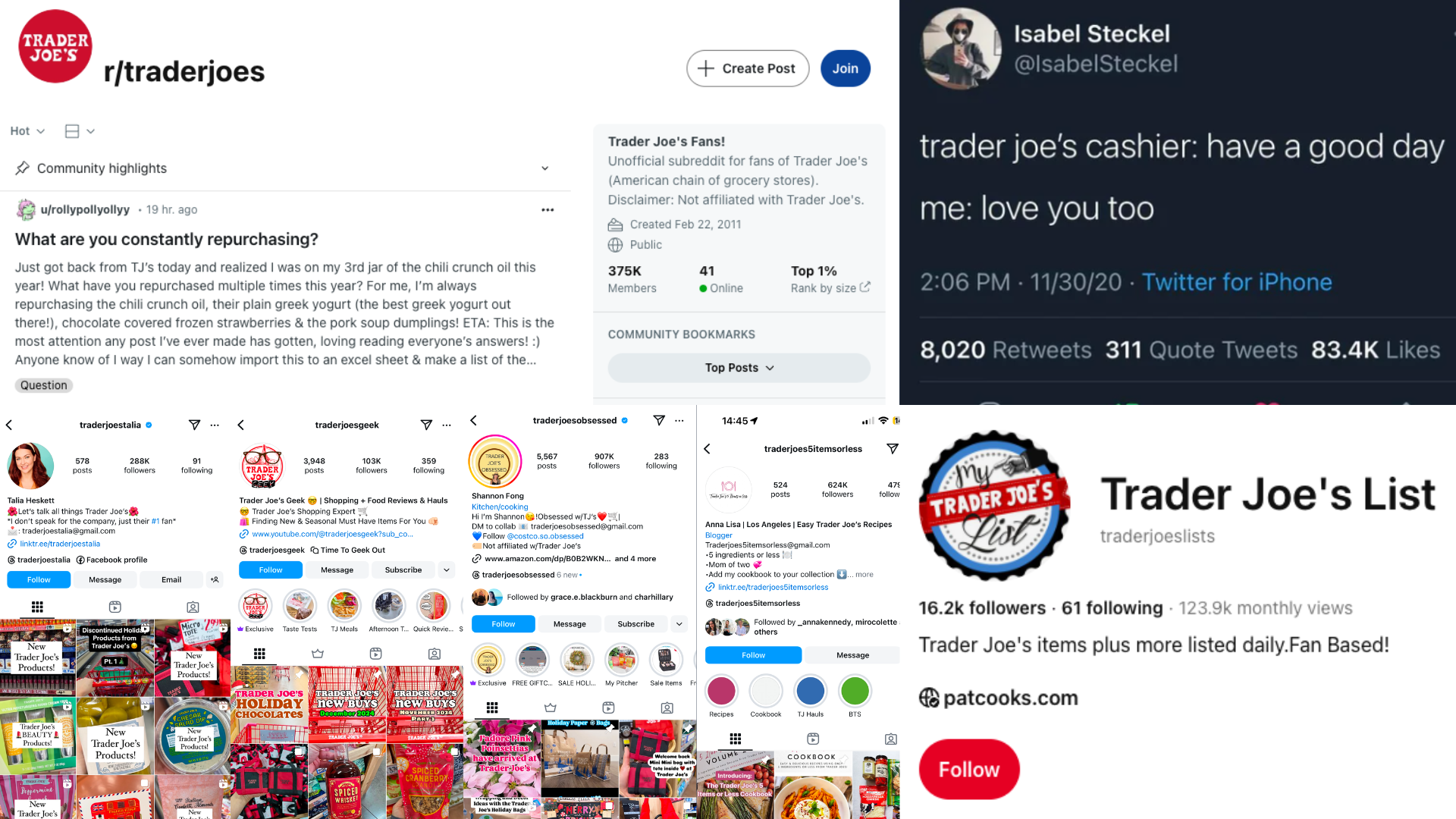
From Reddit threads and fan accounts to recipe swaps and viral moments, Trader Joe’s has become a shared language among Millennials. Shopping there signals belonging, not just preference.
The brand lives as much online and socially as it does in-store.
A Strategic Opportunity.
Lean into what already exists.
Trader Joe’s strength isn’t just its products, it’s the community that has formed around them.
Millennials already use Trader Joe’s as a shared cultural space: swapping recipes, tracking seasonal items, following fan accounts, and turning everyday interactions into moments of connection. This behavior reveals an opportunity to shift future campaigns from traditional messaging to participatory storytelling.
By leaning into recipe sharing, creator collaboration, and cooking communities, Trader Joe’s can meet Millennials where they already engage, using food as both content and conversation. Recipes become proof of product versatility. Influencers become facilitators, not spokespeople. Community groups become extensions of the brand experience.
The Takeaway
Why Trader Joe’s Works.
Trader Joe’s success with Millennials isn’t a coincidence, it’s a reflection of deep cultural alignment. The brand speaks to a generation that is highly educated, financially constrained, and unwilling to compromise on quality. By offering globally inspired, well-made food at accessible prices, Trader Joe’s allows Millennials to live out their values without feeling like they’re settling.
More than a grocery store, Trader Joe’s functions as a shared cultural space. Through recipes, seasonal rituals, and community participation, the brand creates emotional loyalty that can’t be replicated through price alone.
Trader Joe’s doesn’t just make Millennials feel frugal. It makes them feel smart.